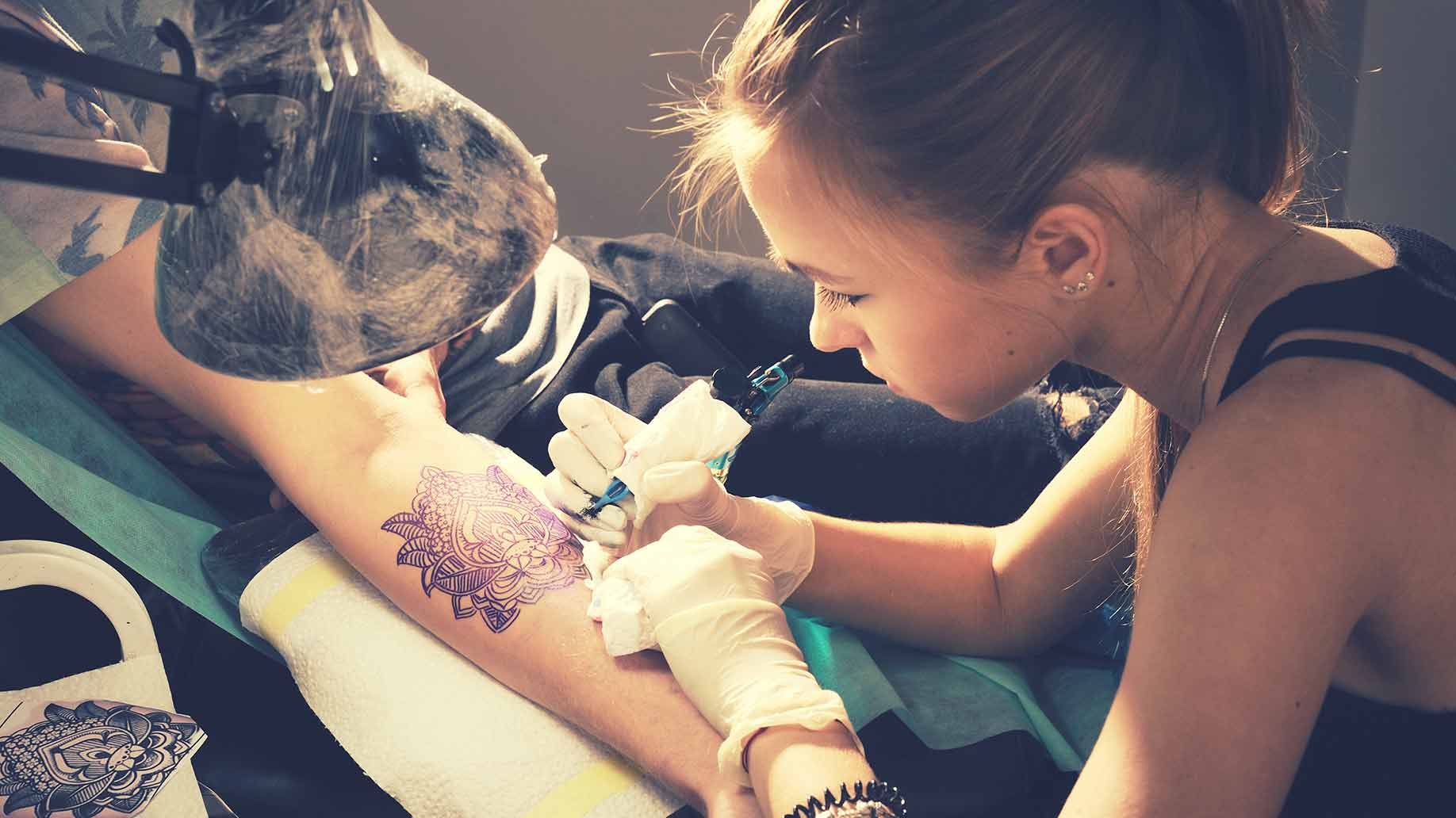
Ballpark Estimate: $50 to $100 for an average tattoo + tip; $50 to $300 per hour for a custom tattoo + tip
These days, whether you’re in a big city, small town, the suburbs, or a shopping mall, it’s pretty easy to find a tattoo studio, as the popularity of body art as a form of personal expression soars. But if you’re thinking about getting some ink, you should also be asking some serious questions. How can you tell a good studio from one that’s not so good, or a skilled tattoo artist from a rank beginner? Is it going to hurt? And most of all, what will it cost?
Safety First
Tattooing is regulated by city, state, and county laws and in most cases, tattoo artists must be licensed and the shops must meet strict health department standards. As you search for your favorite tattoo artist, check out a variety of studios. Usually, employees or the owner are happy to give you a tour, and explain the safety and health laws and how they follow them. The Centers for Disease Control and Prevention recommends that, as “personal service workers,” tattoo artists adhere to the following safety procedures:
Single-use, Disposable Needles, and Razors
Immediately prior to your tattoo, insist that you see your tattoo artist remove new needles, razors, and tube or ink set-up from a sealed envelope. This reduces the likelihood that serious diseases such as HIV, hepatitis B, or hepatitis C are transferred between customers and tattooists.
Safe Disposal of Needles and Razors
Used needles and razors should be disposed of in a special, biohazard-labeled, disposable container.
Sterilization Equipment
Reputable studios use an autoclave to sterilize their non-disposable equipment. Most owners and artists will mention this on your first visit.
Gloves
Tattoo artists must wear disposable surgical gloves; a new pair for each new customer. Hands should be washed before putting on gloves and after removing them.
Clean Work Areas
Take a close look at the work stations for the tattoo artists. All surfaces (chairs, tables, equipment) should be sparkling, and frequently cleaned with disinfectant, similar to a doctor’s office.
Fresh Ink
Ink can become contaminated with blood while you’re getting your tattoo. Your tattoo specialist must use fresh ink for each new customer. Fresh ink is poured into small plastic cups prior to your tattoo session. (Some studios may use small bottles or packets of ink). If your artist needs to replenish the ink cups, gloves should be removed prior to refilling, and new gloves should be put on.
Many tattooists belong to the Alliance of Professional Tattoists, Inc., a non-profit educational organization founded in 1992 to promote health and safety in the tattoo business. Whether they’re members or not, all tattooists should follow the safety guidelines mentioned above, and on the APT website.
What It Costs
The cost of your tattoo depends largely on type, size, colors, complexity, placement on your body, and, of course, time.
Flat Rate for Flash
Most studios have a large selection of pre-designed sheets (called “flash”) displayed on their walls. There are also small standards like hearts, roses, and simple lettering. Usually, these require about 1 hour of chair time. The cost is between $50 to $100, depending on size, color, and placement on your body.
Hourly For Custom Designs
If you’re looking for something more complicated and creative, or if you have your own design, an hourly rate will apply. Rates vary widely, depending on location of the studio and the skill and reputation of the artist. The cost is between $50 to $300 an hour, with $100 to $150 per hour being your best bet.
Illustration Time
If your tattoo is complex and requires special illustration time, you may or may not be charged an additional hour’s time for this service. It depends on the studio and the artist, and you should understand the shop’s policy before you settle into the chair. The cost is between $0 to $300, depending on artist.
Finding the Right Tattoo Artist
“Good tattoos aren’t cheap, and cheap tattoos aren’t good.” As always, you get what you pay for, and this purchase will last a lifetime, whether you like it or not. If you find someone who will give you a tattoo for free, or for a very low price, be wary. These people are often just starting out, and are in need of people to practice on. If that’s what you want, fine. But remember: a cheap tattoo will, sooner or later, look like a cheap tattoo.
Choose your tattoo artist based on quality, rather than price, convenience, or even personality. While you definitely want to feel comfortable with your tattooist, skill and talent are paramount.
One of the best ways to find a skilled artist is to tactfully approach people sporting tattoos that appeal to you. Most people are proud of their body art and are happy to talk about it and share the name of their artist. Tattoo magazines and conventions are other ways to learn about artists nationwide, in case you’re willing to travel. They also give you new ideas about the artwork available and the different styles of tattoo art.
Visit local shops and check out the artwork. Don’t just look at the flash on the walls. Ask to see artists’ portfolios, and, if possible, talk to them about their work and what style they prefer. Shop around. Don’t be in a hurry. Your decision to get a tattoo should be a gradual one, as you decide who will do it, what you want, and where you want it.
Additional Costs or Discounts
Let’s say you find a competent tattooist, decide on a tattoo, and you’re given a cost estimate. The following are a few tips before you proceed any further:
- No Haggling – Do not dicker with the artist. If you feel that you can’t afford the price, talk about how to create a smaller or simpler tattoo that you can afford or wait until you can afford the tattoo you want, and come back to the studio.
- Agreement – Be clear about what you’re getting and what you’re paying, before the work begins.
- Extras – Some artists charge 10 to 25% extra for work on a difficult part of the body. (See Location, location, location, below.)
- Deposit – You may be asked to pay a deposit of around $50, but never pay large amounts up front. Tattoos are a “pay as you go” art form.
- Discounts – Hourly discounts are sometimes awarded to customers who regularly frequent the same artist.
- Tips – Tip your artist: 15 to 20% of the total cost, if you are pleased with your tattoo.
- Touch Ups – Costs to touch up colors on old tattoos vary. To prevent fading, start with a skilled tattoo artist, and take proper care of your tattoo.
- Regrets – Thousands of dollars for laser removal (which doesn’t always work) if you are unhappy with your tattoo and want it removed.
Location, Location, Location (Will It hurt?)
Wondering where that new tattoo should go and if it will hurt? People have widely varying tolerances for pain, but generally, it goes like this:
- Least Sensitive Areas – upper arms, forearms, calves, shoulder blades, outer thighs, and buttocks.
- More Sensitive Areas – ankles, lower back, neck, underarm, groin area, and head.
- Most Sensitive Areas – genitals (duh), sternum, ribs, hands, and feet.
And yes, for most people, it hurts. People have described the pain of tattooing as similar to scratching a badly sunburned area, getting a bad scrape, or repeated bee stings. The tattoo machine involves high speed vibration, which allows the tattoo needles to push ink into the deeper (dermis) layer of your skin. The outer, thinner layer, called the epidermis, is constantly shedding and replacing itself, while the dermis layer, now colored by the ink, remains permanent.
How to Make the Process Easier, Less Painful, and Safer
- Be excited and highly motivated to get your tattoo. If you are tense or worried, it will hurt more.
- Do NOT drink alcohol prior to getting a tattoo. Alcohol dehydrates your body and thins your blood, causing you to bleed more.
- Arrive well fed and hydrated. This energizes your body, normalizes your blood-sugar levels, and strengthens you physically and emotionally.
- Be healthy. If you have a cold, flu, or are just feeling under-the-weather, put off your tattoo experience for a later date.
- Consult your physician if you have a pre-existing condition such as diabetes, heart problems, or any condition that weakens your immune system.
- Avoid taking aspirin or aspirin-based medications (blood thinners) prior to your tattoo appointment. If you want to take a pain killer, take acetaminophen.
Legal and Health Issues
- You must be 18 years of age, and be able to prove it with a government-issued picture ID, to receive a tattoo. No exceptions.
- No reputable artist will give a tattoo to a customer who is drunk or otherwise intoxicated.
- Pregnant women should consult their physicians prior to getting tattoos. The greatest risk, of course, is possible infection. Another complication is that women’s bodies change dramatically during and after pregnancy, which, depending on location, may alter the appearance of the tattoo.
- People with chemical sensitivities or allergies should speak with the artist and with their doctors before getting a tattoo.
- Anyone with a depressed immune system, or people who have difficulty healing, should not get tattooed or should discuss this with their doctors prior to receiving the tattoo.
- People with advanced diabetes should not be tattooed, particularly in their lower legs or feet.
Long-Term Health Issues
According to the U.S. Food and Drug Administration, there are some long-term risks you should think about before getting your tattoo.
Infection
Choose only studios that strictly adhere to the best safety precautions and you will greatly reduce your risk of blood-borne infections.
Allergies
Your tattoo artist should ask about your allergy history and perform a patch test to see if you are sensitive to the inks. Some people have delayed reactions to tattoo inks months or years later (called “red reaction”), with itchy or inflamed skin around their tattoos in the summer, after extended time in the sun.
Scarring
Depending on how your body typically heals, your tattoo may cause some scar tissue to form.
Granulomas
These are small knots or bumps that form when your body is trying to fight off what it perceives as a foreign substance. Some people may have this reaction to certain inks in tattoos.
MRI Complications
If you should need magnetic resonance imaging (MRI) for a medical problem, be sure to alert the technician so appropriate precautions can be taken. The FDA says that in rare instances, an MRI may cause temporary swelling or burning in the tattoo. However, if you have a tattoo, do not avoid getting an MRI if you need one.
It’s Yours for Life
Think long and hard about getting your tattoo and don’t do it on the spur-of-the-moment or in a rush of emotion. Relationships change, personalities change, lifestyles change. If you want your tattoo removed later in life, laser removal is time-consuming, extremely costly, and doesn’t always work. Certain inks are harder to remove than others, and some tattoos may never truly disappear. (See What It Costs for Tattoo Removal.) But if you truly love your tattoo, it can be a wonderful, lifelong way to express yourself through body art.